
STRENGTH
STRENGTH (Strengthening community-based climate adaptation in Uganda & South Sudan)
The Strengthening Community-Based Climate Adaptation in Uganda and South Sudan (STRENGTH) Project is a transformative initiative designed to build resilience among vulnerable communities affected by climate change and conflict. Through climate-smart practices and holistic natural resource management, the project is empowering displaced populations, host communities, women, agro-pastoralists, and smallholder farmers to withstand and adapt to climate-related shocks while sustaining their livelihoods.
Project Overview
The STRENGTH Project represents a consortium-led approach to climate adaptation, implemented through strategic partnerships and local engagement. The project combines technical expertise, community participation, and evidence-based practices to address the dual challenges of climate variability and fragility in Sub-Saharan Africa.
Implementation Partners
The STRENGTH Project is implemented through a robust consortium that brings together international and local expertise:
Partner Type | Organizations |
Consortium Lead | ADRA Denmark |
International Partners | Welthungerhilfe (WHH), Danish Family Planning Association (DFPA) |
Uganda Implementation | ADRA Uganda, Reproductive Health Uganda |
South Sudan Implementation | ADRA South Sudan, WHH South Sudan, Organisation for Peace, Relief & Development (OPRD) |
Funding Partner | Danida (MFA Denmark) |
Project Objective
The overall objective of the STRENGTH Project is to build resilience to climate- and weather-related shocks, both slow- and sudden-onset, by averting, minimizing, and addressing loss and damage among vulnerable populations in fragile and displacement-affected contexts in Sub-Saharan Africa.
The project achieves this objective through comprehensive interventions that combine:
- Climate-smart agricultural practices
- Holistic Natural Resource Management (HNRM)
- Technical capacity building and knowledge transfer
- Conflict-sensitive approaches to resource management
- Market linkages and value chain development
Target Communities
The STRENGTH Project targets vulnerable communities affected by the dual challenges of climate change and conflict. With a deliberate focus on inclusion and equity, the project prioritizes:
- Women and women-led groups – Recognizing the critical role women play in agriculture and household food security
- Displaced populations – Supporting refugees and internally displaced persons to rebuild their livelihoods
- Host communities – Strengthening the resilience of communities hosting displaced populations
- Agro-pastoralists – Supporting communities dependent on mixed farming and livestock systems
- Smallholder farmers – Empowering small-scale farmers to adopt climate-resilient practices
Implementation Areas in Uganda
In Uganda, the STRENGTH Project focuses on two key regions characterized by high climate vulnerability and conflict-affected populations:
Acholi Sub-region
- Lamwo District (Palabek Refugee Settlement and surrounding areas)
- Kitgum District
Karamoja Sub-region
- Karenga District
- Kaabong District
Key Interventions
Climate-Smart Agriculture (CSA)
Under Outcome 2, Output 2.1, the STRENGTH Project strengthens community capacity to practice sustainable and climate-sensitive agriculture, thereby reducing the negative impacts of climate-induced shocks and stressors. This is achieved through:
- Provision of drought-tolerant, short-maturity seed varieties suited to areas experiencing erratic rainfall and prolonged dry spells
- Technical training and capacity building delivered by agricultural scientists and experts, combining theoretical knowledge with practical field demonstrations
- Support for high-value, climate-resilient enterprises such as sunflower production, which can withstand extreme weather conditions
- Improved agronomic practices including proper land preparation, timely planting, and soil conservation techniques
Holistic Natural Resource Management
The project supports displaced and host communities to practice Holistic Natural Resource Management (HNRM) in a conflict-sensitive manner. This approach ensures that natural resources are managed sustainably and equitably, reducing competition and potential conflicts while enhancing long-term resilience.
Partnership with Research Institutions
ADRA Uganda works closely with national agricultural research institutions, including the National Agricultural Research Organisation (NARO), to ensure that interventions are evidence-based and technically sound. Scientists from NARO provide onsite training and demonstrations, ensuring farmers receive the most current and relevant agricultural knowledge.
Collaboration with Local Government
The project operates in close collaboration with District Local Governments and Sub-County Production Departments, ensuring alignment with local development priorities and facilitating sustainability beyond the project period.
Success Story: Lomule Women Catering Group
The success of the Lomule Women Catering Group in Kitgum District exemplifies the transformative impact of the STRENGTH Project’s climate-smart agriculture interventions.
Background
Located in Lomule Village, Katwoto Parish, Orom East Sub-County in Kitgum District, the Lomule Women Catering Group comprises 31 members (23 women and 8 men). The group was identified and supported by ADRA Uganda—working closely with Kitgum District Local Government and Orom East Sub-County—as one of eight farmer groups selected for Climate-Smart Agriculture interventions in the district.
The Intervention
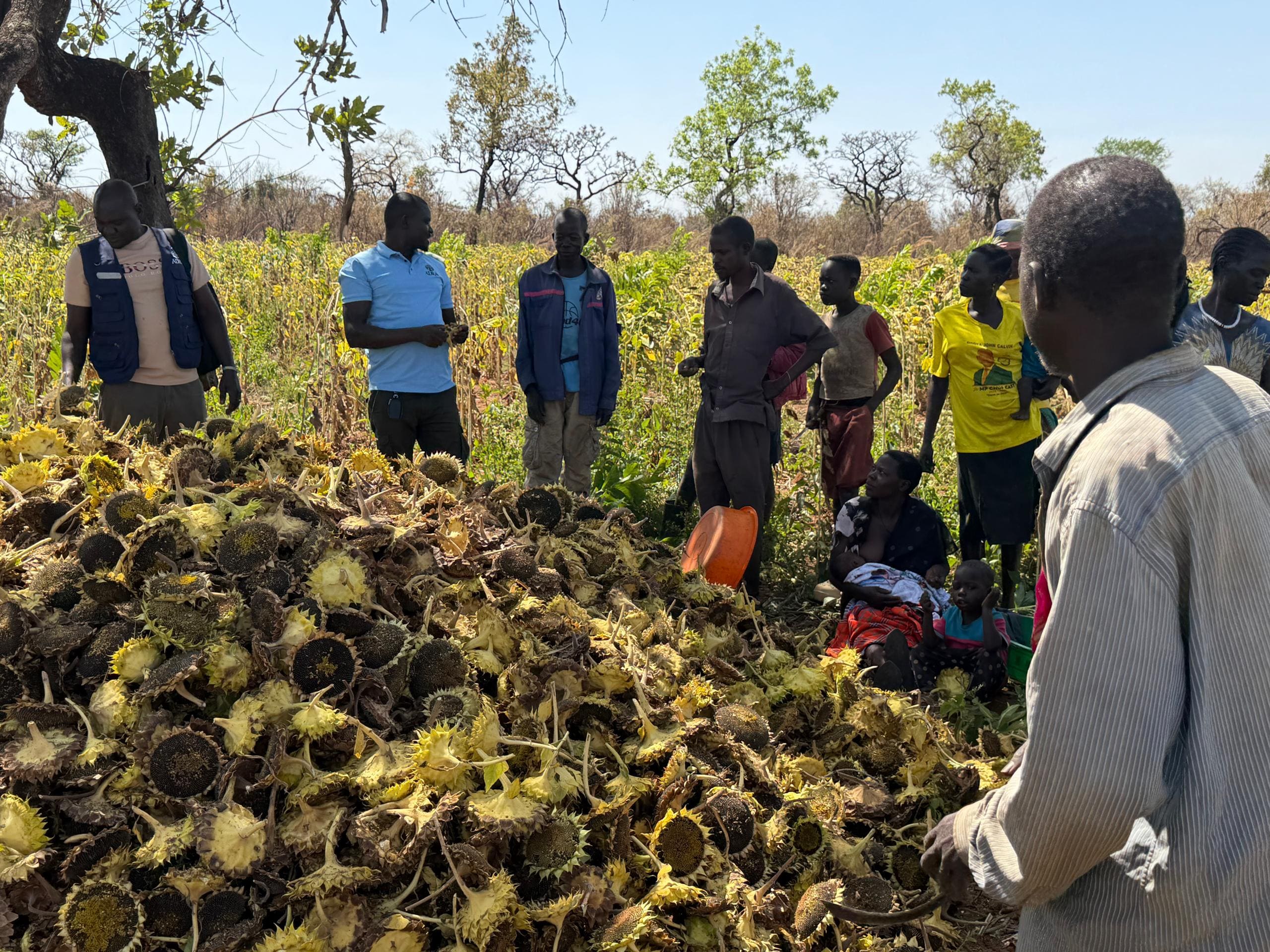
In October 2025, the group received support to engage in sunflower production, identified as a high-value and climate-resilient enterprise suitable for the region’s challenging climatic conditions. ADRA Uganda provided:
- Drought-tolerant, short-maturity sunflower seed varieties suitable for areas experiencing erratic rainfall and prolonged dry spells
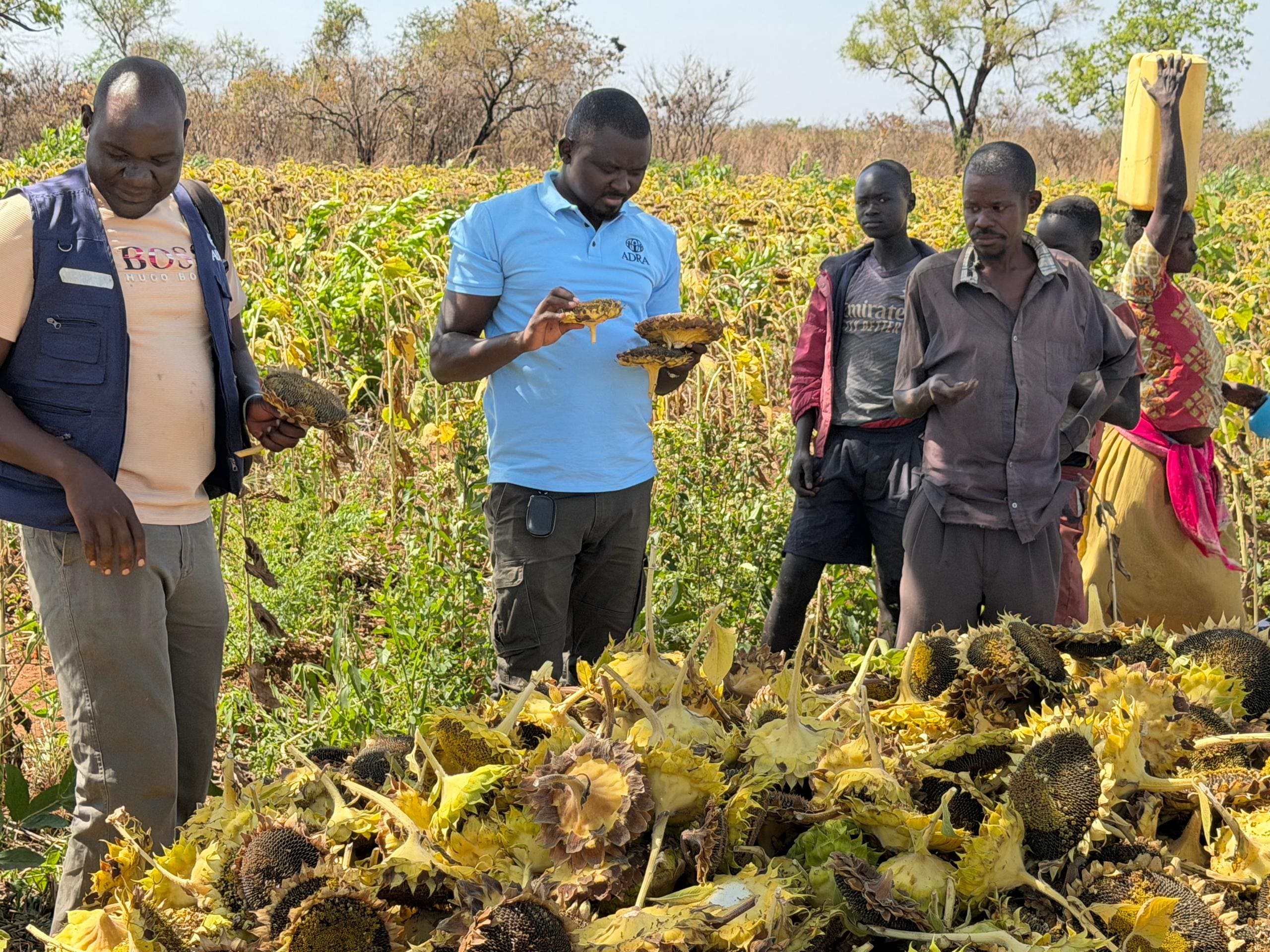
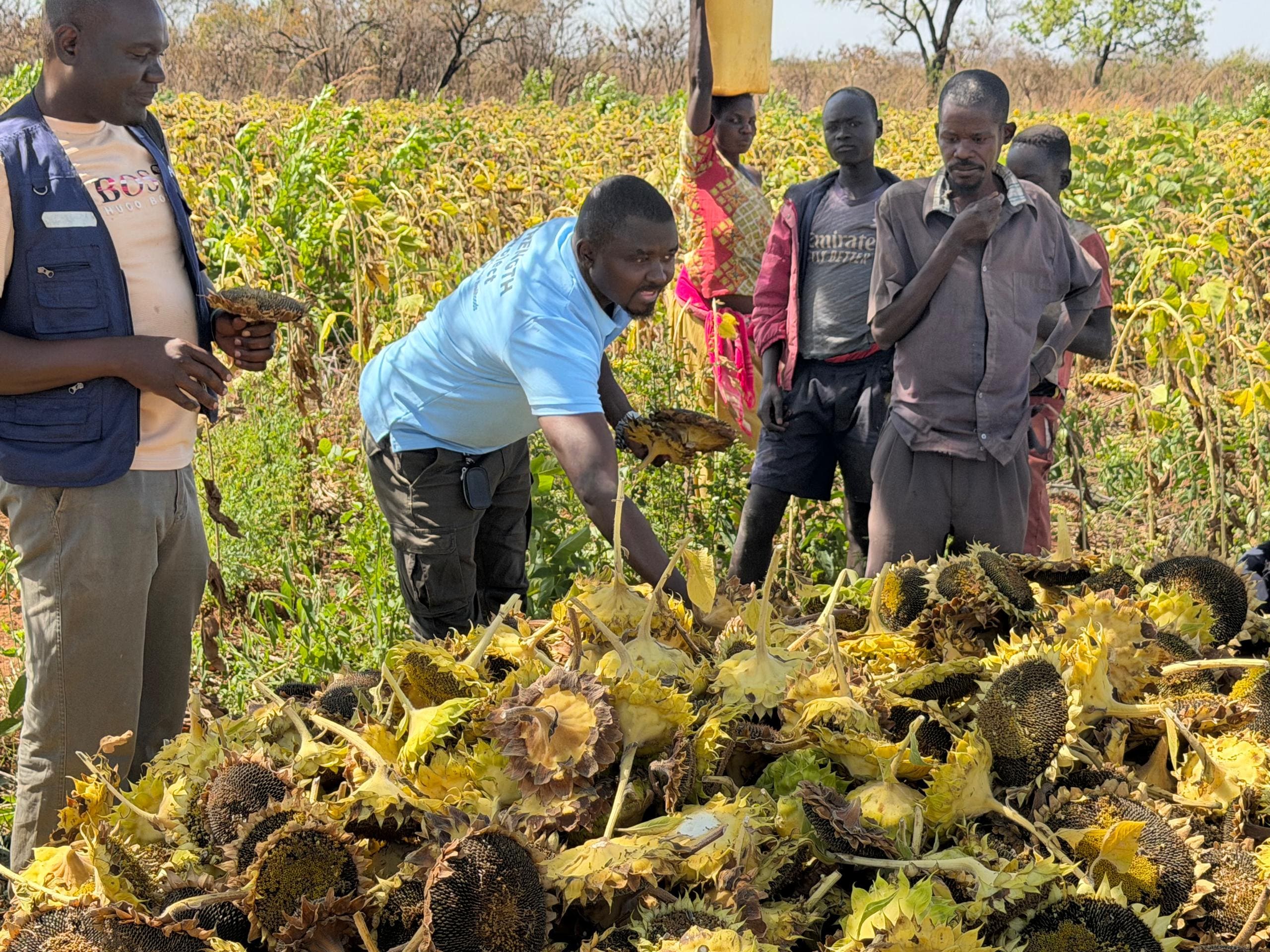
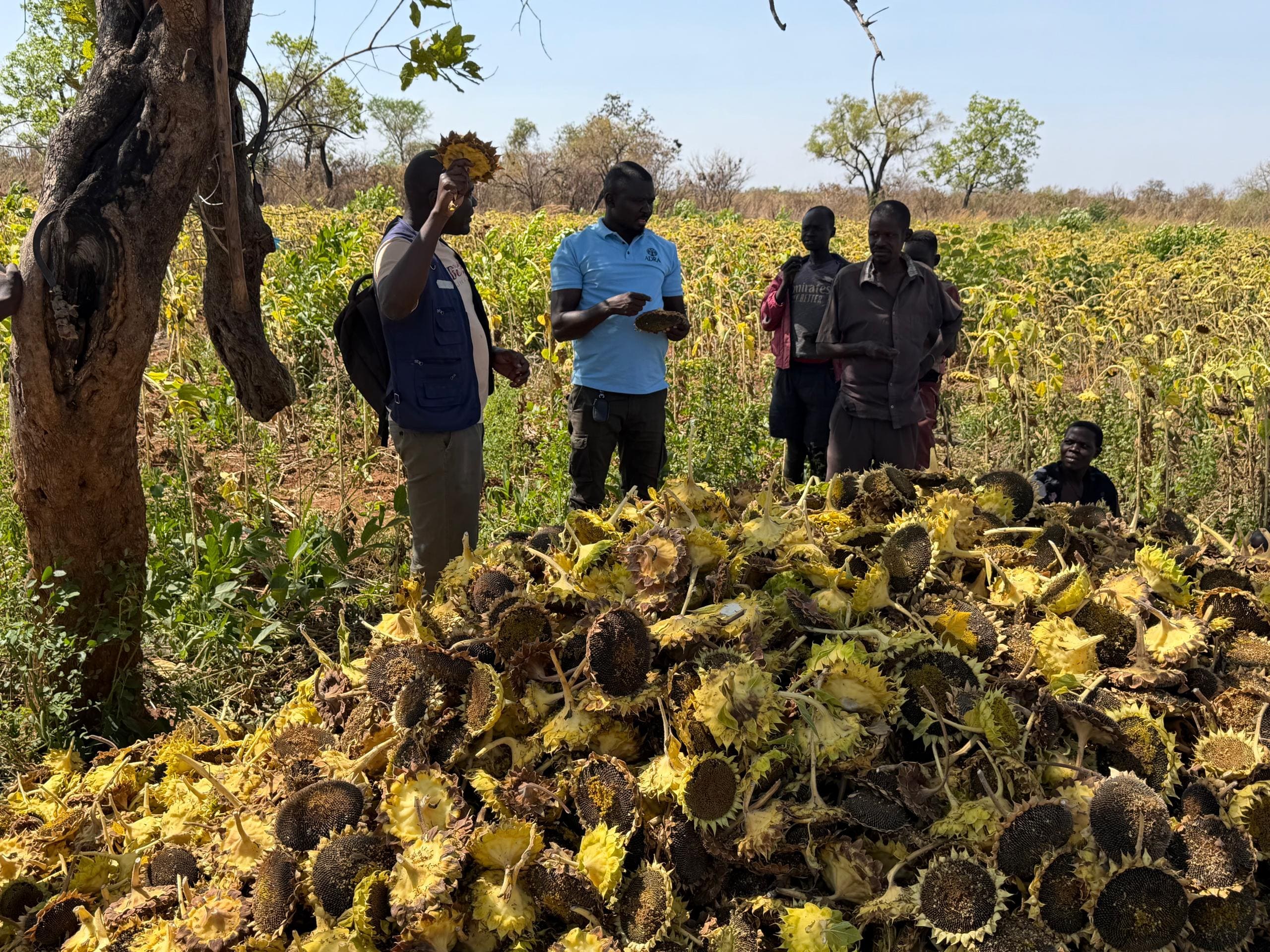
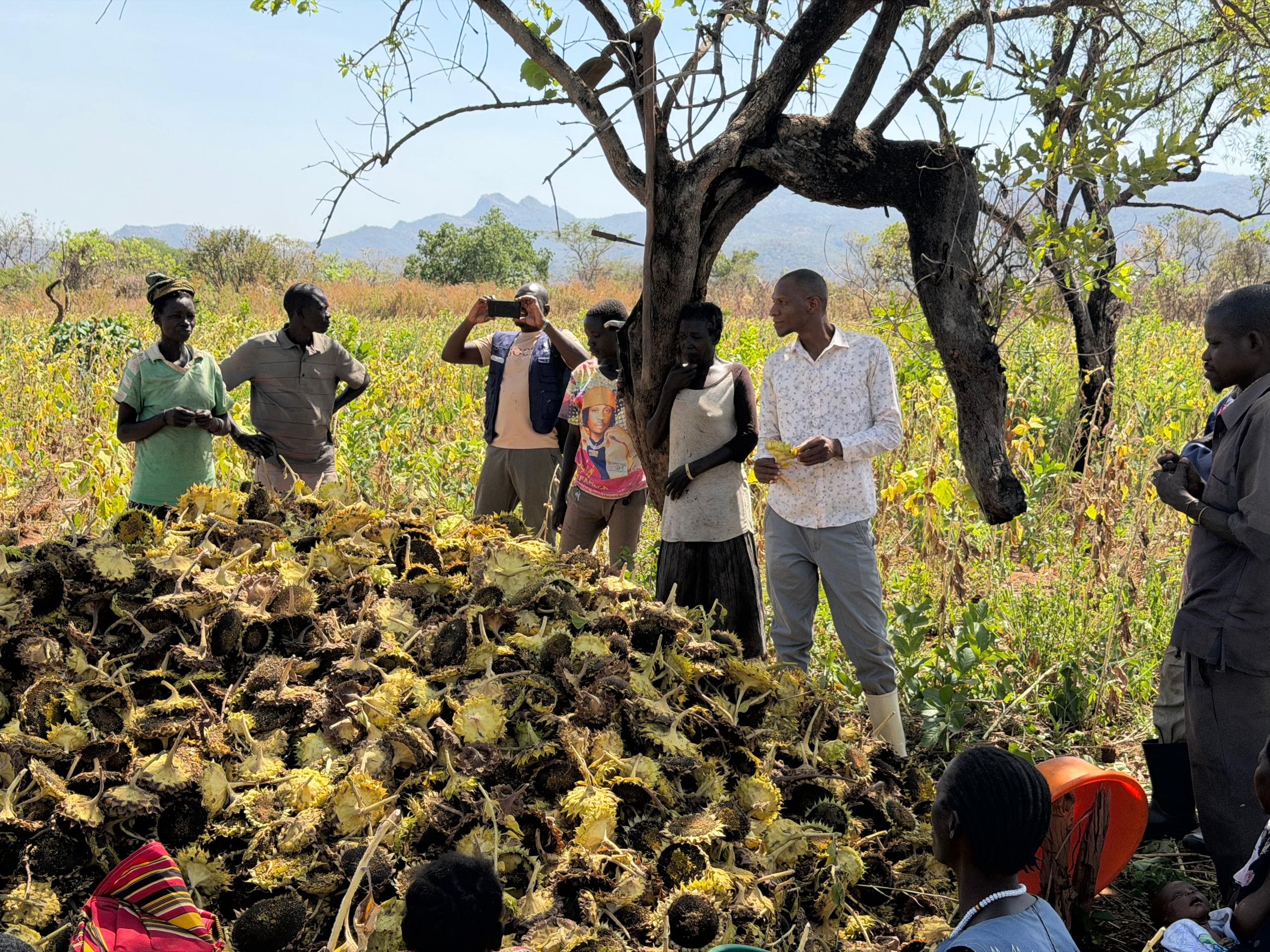
- Comprehensive Climate-Smart Agriculture training facilitated by scientists from NARO Arua, led by Dr. Odama Emmanuel, with support from the Sub-County Production Department
- Practical field demonstrations to ensure farmers fully understood and could apply CSA principles
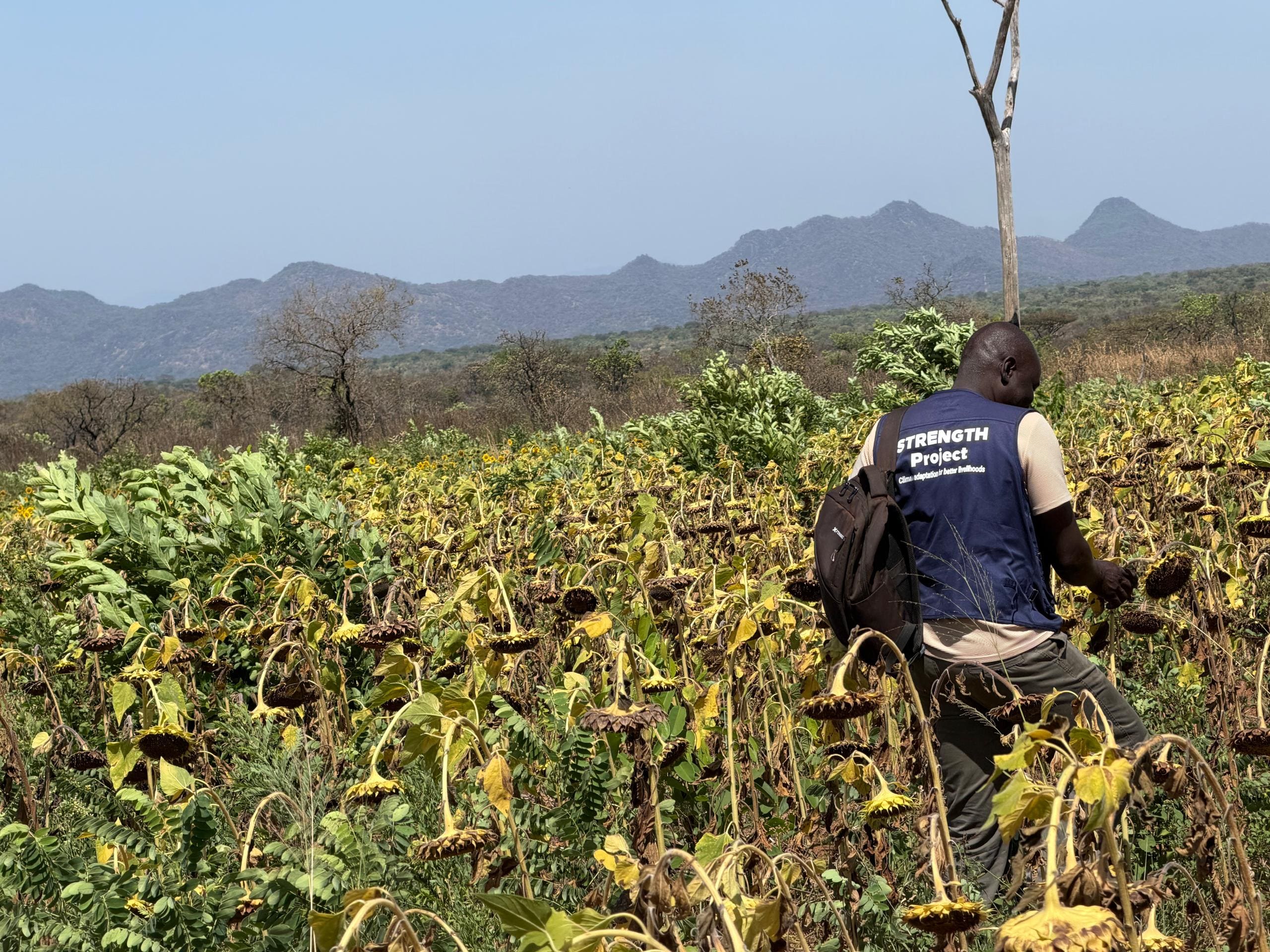
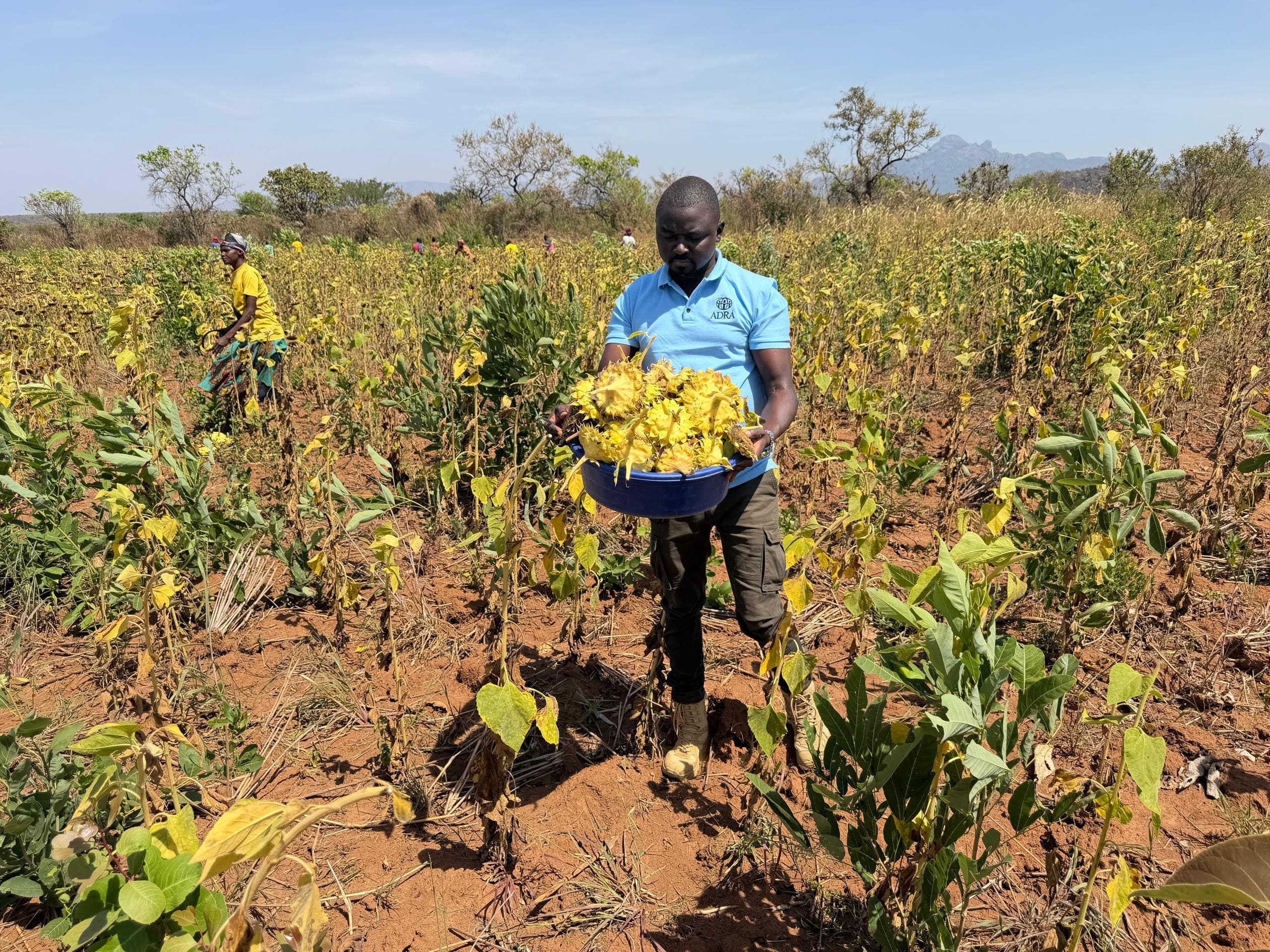
Following the training, the group planted 10 acres of sunflower in the last week of October 2025.
Results Amid Extreme Climate Conditions
Remarkably, despite experiencing one of the most extreme heat events in recent years, the Lomule Women Catering Group is now successfully harvesting sunflower with encouraging yields. This achievement stands in stark contrast to the experiences of many other farmers in the region who suffered crop failures due to the extreme heat.
According to Bongomin Geoffrey, ADRA Uganda’s Community Support Assistant in Orom East, and Arubaku Godfrey, Project Manager for the STRENGTH Project, the improved yields are directly linked to:
- The use of drought-tolerant seed varieties
- Proper land preparation techniques
- Timely planting aligned with weather patterns
- Application of improved agronomic practices learned through CSA training
Community Voices
The group members have expressed their excitement over the results. As one farmer from Lomule Village noted:
“We did not just receive seeds; we received knowledge. That knowledge helped us protect our crop even when the rains delayed and the heat increased.”
Another member shared:
“Before this support, we feared planting because of the heat. Now we see that with the right seeds and knowledge, we can still harvest.”
Looking Forward
Encouraged by their success, the Lomule Women Catering Group has committed to expanding their acreage and increasing production in 2026, even as climate variability persists. The group has also requested ADRA Uganda to facilitate market linkages, connecting them with potential off-takers including major processors such as Mukwano Industries, to ensure their production translates into sustainable income.
Impact and Significance
The success of the Lomule Women Catering Group and other farmer groups supported under the STRENGTH Project demonstrates several critical points:
Climate-Smart Agriculture Delivers Results
Even during extreme weather events, farmers equipped with the right knowledge, inputs, and technical support can achieve successful harvests. As Arubaku Godfrey notes, “This harvest proves that climate-smart agriculture is not theory—it delivers results on the ground, even during extreme weather events.”
Women’s Leadership in Climate Resilience
With women comprising the majority of the Lomule group’s membership, the success story underscores the critical role women play in building climate resilience and ensuring household food security. When women are empowered with knowledge and resources, entire communities benefit.
Community Engagement and Ownership
The project’s approach of working through community-based groups, in collaboration with local government and research institutions, ensures that interventions are locally owned and sustainable. This model facilitates knowledge transfer and builds local capacity that will outlast the project period.
Resilient Livelihoods Are Possible
The STRENGTH Project demonstrates that with the right interventions, vulnerable communities can withstand climate shocks and sustain their livelihoods. This achievement offers hope and a practical pathway for adaptation in the face of increasing climate variability.
The Way Forward
The STRENGTH Project continues to expand its climate-smart interventions across Acholi and Karamoja sub-regions, supporting more farmer groups and communities to build resilience in the face of climate change. The project’s comprehensive approach—combining climate-smart agriculture, natural resource management, technical capacity building, and market linkages—provides a proven model for climate adaptation in fragile and displacement-affected contexts.
Through continued partnership with Danida, ADRA Denmark, Welthungerhilfe, and other consortium members, ADRA Uganda remains committed to empowering vulnerable communities to adapt, thrive, and build long-term resilience.
Project Team
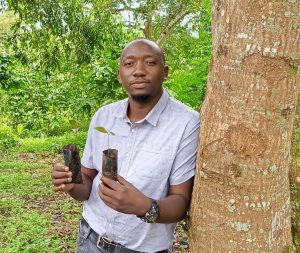
Aliguma Ahabyona Akiiki
Project Manager