
Leaders in Arua District have called for increased support to strengthen Ebola preparedness and response efforts, warning that resource constraints continue to undermine measures aimed at preventing the spread of the disease in border communities.
The appeal was made during Ebola preparedness and response orientation sessions for District Task Force members in Arua, one of Uganda’s high-risk districts bordering the Democratic Republic of Congo (DRC), where the Bundibugyo strain of Ebola Virus Disease is currently circulating.
District officials highlighted several challenges affecting the response, including porous borders, limited logistics for surveillance teams, inadequate facilitation for frontline personnel, and the continued movement of people through unofficial crossing points.
According to local leaders, hundreds of informal border routes exist across the West Nile region, making it difficult for security and health teams to effectively monitor all entry points. They warned that the movement of unscreened travellers increases the risk of importing Ebola infections into Uganda.
Leaders also expressed concern over inadequate funding for enforcement and surveillance activities. Many personnel involved in border monitoring, community surveillance, and public awareness campaigns are reportedly operating with little or no facilitation despite the increasing demands of the response.
“We are dealing with a public health threat that requires constant vigilance, yet many of our teams lack adequate resources to conduct regular patrols, community sensitisation, and enforcement activities,” said Arua District Deputy Resident District Commissioner Denis Jawoko during the orientation.
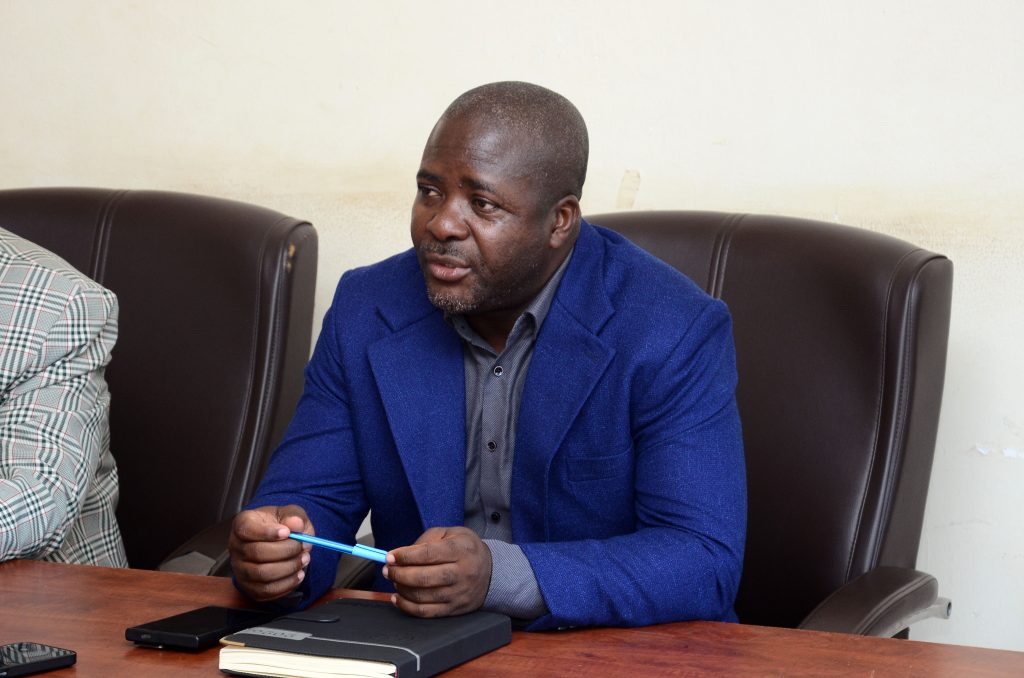
Denis Jawoko the Arua Deputy Resident District Commissioner. Photo by Lawrence Mulondo
The concerns come as Uganda continues to respond to Ebola cases linked to transmission originating from the DRC. The country has confirmed 19 cases, including two deaths, while investigations and monitoring continue in several districts.
Arua, Zombo, Nebbi, and Pakwach districts have been classified as high-risk due to their proximity to the DRC and the presence of major transport corridors and border crossing points that facilitate the daily movement of people and goods.
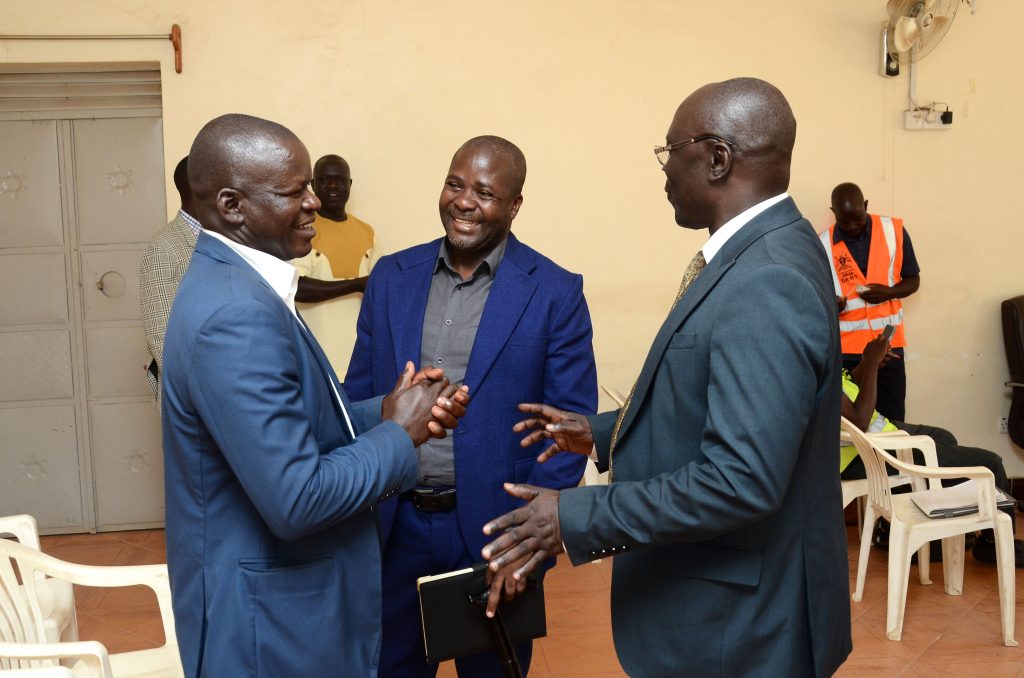
(L-R) Cosmas Ayikobua the Arua District Chairperson interacting with Denis Jawoko the Arua Deputy Resident District Commissioner and Ronald Ocaatre, the Assistant Commissioner for Health Promotion, Education and Strategic Health Communication at the Ministry of Health. This was during the orientation of Arua leaders on Ebola at the district headquarters in Arua district on June 11, 2026. Photo by Lawrence Mulondo.
To strengthen preparedness and response efforts in these districts, ADRA Uganda is working closely with the Ministry of Health, District Task Forces, local governments, Village Health Teams, faith leaders, and community structures to reduce the risk of Ebola transmission and protect vulnerable populations.
ADRA’s support focuses on strengthening risk communication and community engagement, promoting infection prevention measures, and supporting district-level coordination efforts. The organisation is also facilitating the training and orientation of District Task Force members to ensure they possess the knowledge and skills required to respond effectively to potential cases and community concerns.
Through radio spot messages, interactive talk shows, and community outreach activities, ADRA is helping disseminate accurate and reliable information on Ebola prevention, symptoms, and reporting mechanisms. The organisation is also working to address misinformation, rumours, and stigma, which can hinder effective response efforts.
In addition, ADRA is supporting selected public institutions and high-risk locations with handwashing facilities, soap, sanitisers, disinfectants, waste bins, gloves, and face masks to strengthen hygiene and infection prevention practices.
ADRA’s intervention is expected to reach approximately 90,000 people across the four districts, with particular attention given to vulnerable groups, including children, women, older persons, persons with disabilities, and households facing heightened risks.
Despite these efforts, significant resource gaps remain. Current assessments highlight the need for expanded community awareness campaigns, strengthened cross-border coordination, church-based outreach programmes, enhanced surveillance support, psychosocial services, rumour management, and the continuity of essential health services.
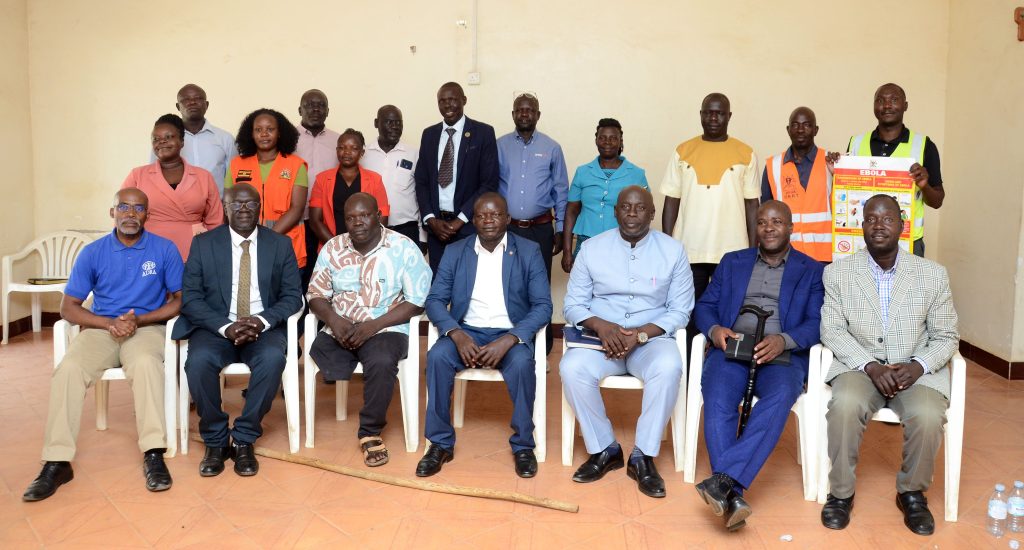
Officials from the Ministry of Health and Adventist Development Relief Agency (ADRA) taking a group picture with the leaders of Arua district during the orientation of the leaders on Ebola at the district headquarters in Arua district on June 11, 2026. Photo by Lawrence Mulondo.
By working through trusted local networks and community structures, ADRA is helping translate national Ebola preparedness plans into practical action at the community level, where timely information, early detection, and preventive measures can save lives.
As the threat of Ebola remains along Uganda’s western border, district leaders continue to urge the government, development partners, and humanitarian organisations to invest in preparedness efforts before the situation escalates further.
“Preparedness is our strongest defence,” said Arua District Chairperson Cosmas Ayikobua. “The more support we receive now, the better our chances of protecting communities and preventing the spread of Ebola.”
Ayikobua expressed his appreciation to ADRA-Uganda for the support, saying the contribution had greatly strengthened the district’s Ebola preparedness and response efforts.
The Assistant Commissioner for Health Promotion and Communication at the Ministry of Health, Dr. Ronald Miria Ocaatre, said partners such as ADRA-Uganda play a critical role in supporting the government to fulfill its mandate.
“We are grateful for the support that ADRA has provided in the fight against Ebola in West Nile. We understand that mobilizing resources is not easy, and whenever such support comes, we are truly thankful. Partnerships like these strengthen our capacity to protect communities and respond effectively to public health emergencies,” he said.